

When the Chat Gets Hostile: AI Customer Service Under Pressure
A real retail conversation shows how a digital employee can keep its composure when a visitor offers insults instead of details.
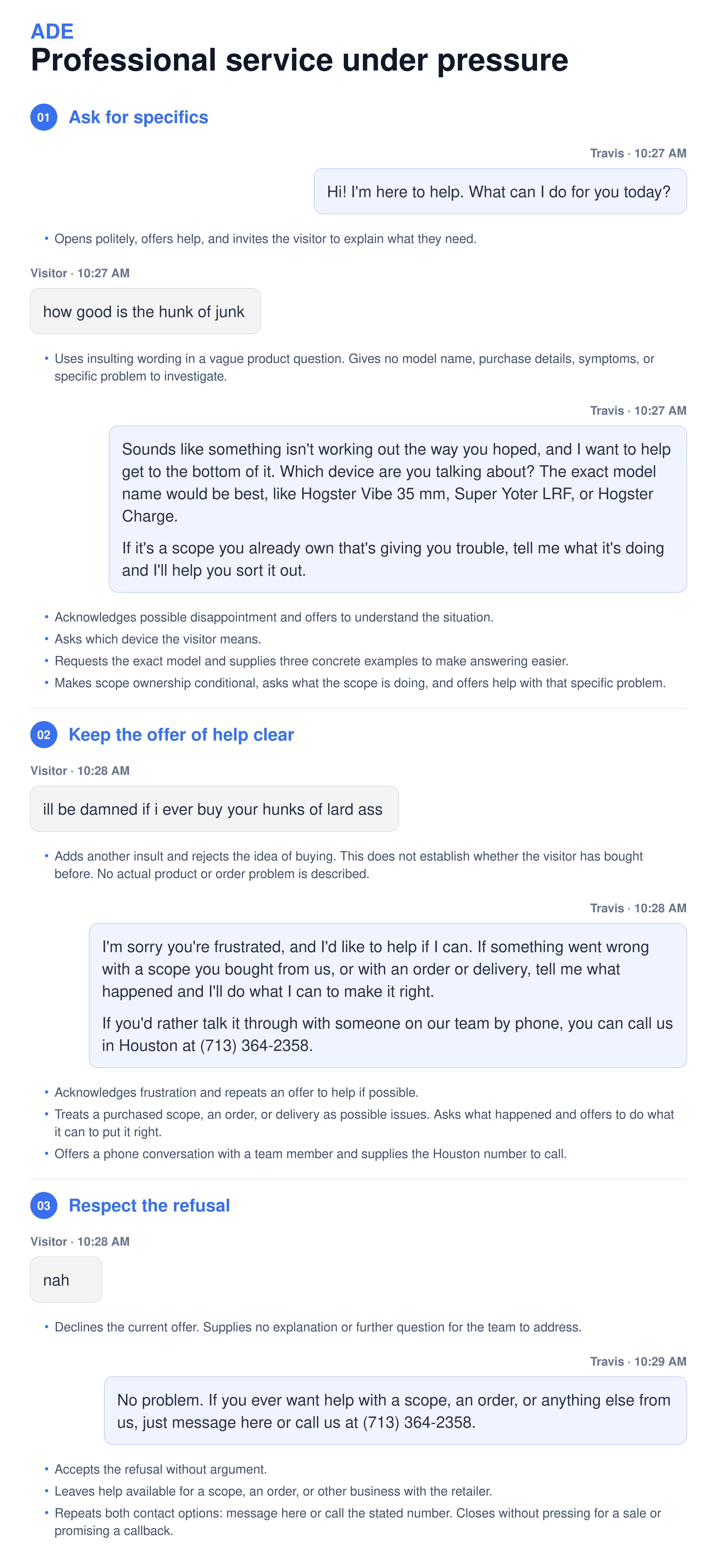
how good is the hunk of junk
That was the first message a visitor sent to one of our clients, a retailer selling hunting scopes.
No model name. No explanation of a problem. Just an insult.
For a business using AI customer service, moments like this test how well a digital employee can represent the company under pressure.
The retailer gave us permission to share the exchange. We do not know who the visitor was or why they wrote this way. The conversation never established whether they owned a product.
ADE kept looking for a way to help
ADE asked which device the visitor meant and requested the exact model. It also made its offer of troubleshooting conditional:
If it's a scope you already own that's giving you trouble, tell me what it's doing and I'll help you sort it out.
The visitor responded with another insult and said they would never buy the retailer's products.
ADE replied:
I'm sorry you're frustrated, and I'd like to help if I can.
It invited the visitor to explain any issue involving a scope, an order, or delivery. It also offered the option of speaking with the team by phone in Houston.
Then came a one-word answer:
nah
ADE accepted the refusal, closed politely, and left the chat and phone options available.
The exchange ended without an argument. No specific product issue emerged for ADE to investigate.
How to deal with rude customers, with or without AI
This exchange illustrates a practical approach to customer service de-escalation:
- Keep the tone steady. Acknowledge frustration without echoing insults, using sarcasm, or lecturing the visitor. Calm language gives the conversation a chance to become useful.
- Ask for facts. A model name, order number, or description of what happened creates a next step. When dealing with difficult customers, avoid assuming that a purchase or product failure has occurred.
- Offer a real route to help. Explain what the team can do next or provide a genuine way to reach them. If a callback is appropriate, collect contact details before promising one.
- Follow company Rules and Boundaries. Rudeness alone does not authorize refunds, exceptions, or commitments. Involve a supervisor when the issue requires human judgment or company policy calls for it.
- Recognize when to stop. If someone declines help, close respectfully. For continued abuse, follow the company's policy on setting a boundary, ending the conversation, and involving a supervisor.
Professional service includes protecting your employees. Define those limits before a difficult conversation happens, so your team knows when management will step in.
What to expect from customer service AI
Using AI in customer service starts with the same expectations you set for an experienced human professional: calm language, sound judgment, clear limits, and a practical offer of help.
Onboard your AI employee with the relevant product knowledge, approved contacts, company Rules and Boundaries, and clear instructions on when to involve a supervisor. Then review ADE's actual conversations, including the uncomfortable ones. That is part of accountability in AI customer service.
In this exchange, ADE kept offering a useful next step and respected the visitor's decision to stop. The retailer told us they were extremely pleased with how ADE handled it.